
Written by JP ELECTRIC | Published on June 2025
Your electrical panel is the heart of your home’s electrical system, and the most common signs electrical panel needs replacement include frequent breaker trips, flickering lights, burning smells, outdated equipment, and visible physical damage. This article walks you through each warning sign in detail so you know exactly when to call a experienced electrician.
Homeowners across Mesa, Phoenix, Chandler, Gilbert, Scottsdale, Queen Creek, San Tan Valley, and surrounding Arizona communities deal with these issues more often than you might think, especially in older homes and properties that have added major appliances over the years.
Recognize Frequent Breaker Trips as a Key Warning Sign
A circuit breaker that trips occasionally is doing its job. A breaker that trips every week, or every few days, is telling you something is seriously wrong.
When your panel cannot handle the electrical load in your home, breakers trip repeatedly as a safety response. This is one of the most reliable signs electrical panel needs replacement, especially if you have not added new appliances or changed your usage habits.
Common causes of frequent tripping in Mesa-area homes include:
- Panels rated at 100 amps or less in homes with modern HVAC systems, EV chargers, or large kitchen appliances
- Original panels installed in homes built before 1990 that were never upgraded
- Overloaded circuits from added square footage or room conversions
- Faulty breakers that no longer hold a proper charge
- Panels from discontinued brands that lack modern safety ratings
If resetting a breaker has become a regular routine in your household, schedule an inspection with JP ELECTRIC. Do not keep resetting without investigating the root cause.
Identify Flickering Lights and Inconsistent Power as Electrical Panel Symptoms
Lights that flicker when you run your microwave, washing machine, or air conditioner are not just annoying. They signal that circuits are struggling under load.
In Arizona’s heat, HVAC systems run hard for months at a time. Homes in Ahwatukee Foothills, Fountain Hills, Gold Canyon, and Sun Lakes often see this issue peak during summer when cooling demands are highest and panels are pushed to their limits.
Flickering or dimming lights can point to:
- Loose internal connections inside the panel
- Corroded bus bars from age or moisture exposure
- An undersized panel that cannot supply stable voltage
- Failing breakers that allow voltage fluctuations
Voltage inconsistency does not just cause flickering. It can damage sensitive electronics, shorten appliance lifespans, and create fire risks inside your walls over time.
Understand Why Burning Smells or Scorch Marks Demand Immediate Action
A burning smell near your electrical panel is never normal. If you detect a burning odor, see scorch marks around the panel door, or notice discoloration on breaker switches, treat it as an emergency.
These signs indicate that wiring inside or around your panel has overheated. In some cases, arcing is already occurring inside the panel cabinet. Arcing is one of the leading causes of residential electrical fires in the United States.
Do not wait if you notice any of the following:
- A burning plastic or rubber smell near the panel
- Black or brown scorch marks on the panel face or breakers
- Warm or hot panel cover when touched
- Any visible melting of insulation near wiring connections
Turn off the main breaker if you can do so safely, and call JP ELECTRIC immediately at 16028048806. This is not a situation to monitor and revisit. It requires same-day professional attention.
Compare Outdated Panel Brands and Age-Related Risks
Not all panels age the same way. Certain brands and panel types have known defects that make replacement critical regardless of how the panel looks on the outside.
| Panel Brand or Type | Known Issue | Recommended Action |
|---|---|---|
| Federal Pacific Electric (Stab-Lok) | Breakers fail to trip during overloads, fire risk | Replace immediately |
| Zinsco / GTE-Sylvania | Breakers fuse to bus bars, cannot trip properly | Replace immediately |
| Pushmatic | No longer manufactured, parts unavailable | Replace when possible |
| Any panel over 40 years old | General age-related wear, outdated safety standards | Inspect and likely replace |
| 100-amp panels in large modern homes | Insufficient capacity for today’s electrical demand | Upgrade to 200-amp |
Many homes in Apache Junction, Guadalupe, Higley, and Paradise Valley still have original panels from 40 or 50 years ago. These panels were built to different standards and were never designed to power modern homes.
If you are not sure what brand your panel is, open the cover and look for the manufacturer name printed inside. A experienced electrician from JP ELECTRIC can identify problem panels quickly during an inspection.
Review Electrical Panel Replacement Costs and What to Expect
Understanding the cost of panel replacement helps you plan ahead rather than react in a crisis. Prices vary depending on panel size, home complexity, and permit requirements in your local Arizona city or town.
| Service | Typical Cost Range (Arizona) | Notes |
|---|---|---|
| 100-amp panel upgrade to 200-amp | $1,500 to $2,500 | Most common residential upgrade |
| 200-amp full panel replacement | $1,800 to $3,000 | Includes labor, materials, permit |
| 400-amp service upgrade | $3,500 to $6,000+ | Large homes, EV charging, solar |
| Panel inspection | $75 to $150 | Often waived with repair or replacement |
| Permit fees (Mesa, Chandler, Gilbert) | $75 to $300 | Required for all panel replacements |
All electrical panel replacements in Arizona require a permit and inspection. This is not optional. A permit protects you when you sell your home and ensures the work meets current NEC and local code requirements.
JP ELECTRIC handles all permitting for panel replacement projects across our service area, including Mesa, Tempe, Scottsdale, Queen Creek, and San Tan Valley. You do not need to navigate the permit process on your own.
Spot Physical Damage and Age-Related Deterioration Inside the Panel
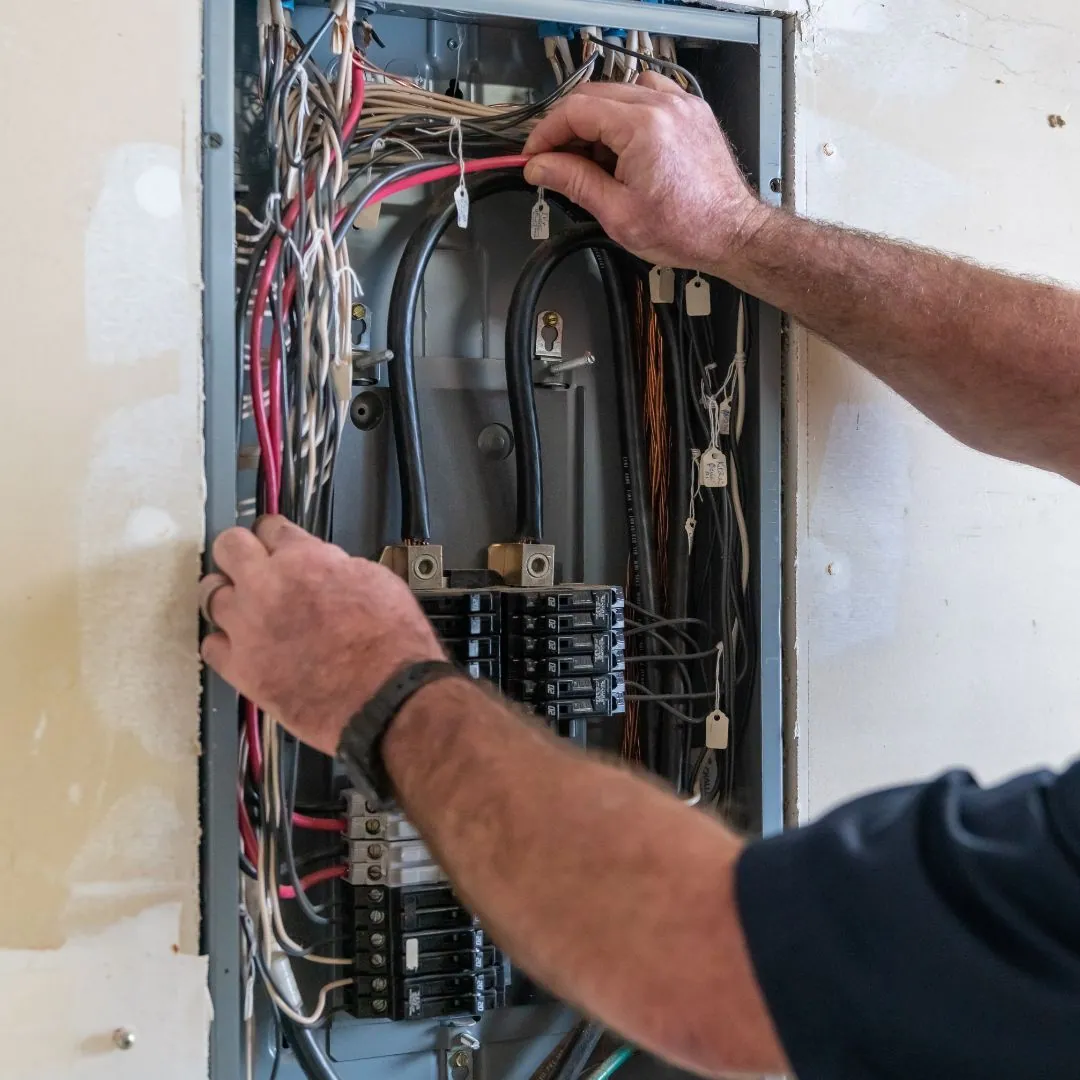
Sometimes the signs electrical panel needs replacement are visible. Open your panel cover and take a look inside. What you see can tell you a lot about the state of your system.
Warning signs of physical deterioration include rust or corrosion on breakers or bus bars, wiring that looks brittle or cracked, multiple wires jammed onto a single breaker (called double-tapping), and wires that were added without proper strain relief or labeling.
Double-tapping is especially common in older homes where electrical work was done without permits or by unqualified workers. Each breaker is designed to hold one wire. Cramming two wires onto one breaker creates heat buildup and increases fire risk.
Rust inside a panel in a dry climate like Arizona can occur near garage installations, outdoor-adjacent walls, or areas with poor weatherproofing. Even small amounts of corrosion affect how reliably breakers connect and trip.
If your panel looks crowded, corroded, or like someone installed components without a clear plan, that is a strong signal to have JP ELECTRIC evaluate whether repair or full replacement makes more sense for your situation.
FAQs on Signs Electrical Panel Needs Replacement
How do I know if my electrical panel is dangerous?
Look for burning smells, scorch marks, breakers that feel warm, or frequent trips that you cannot explain. Panels made by Federal Pacific Electric or Zinsco are considered dangerous regardless of visible condition. A experienced electrician can assess your specific panel and give you a clear answer.
How long does an electrical panel last?
Most electrical panels are designed to last 25 to 40 years. After that point, internal components wear down, safety ratings become outdated, and the risk of failure increases. If your panel is approaching or past that age, an inspection is a smart move even if you have not noticed problems yet.
Can I just replace individual breakers instead of the whole panel?
In some cases yes, a single failing breaker can be swapped out. But if the panel itself is outdated, undersized, or a known defective brand, replacing individual breakers is a short-term fix that does not address the real problem. A experienced electrician can tell you which option applies to your situation.
Do I need a permit to replace my electrical panel in Mesa or Chandler?
Yes. All cities in the East Valley including Mesa, Chandler, Gilbert, and Queen Creek require permits for electrical panel replacement. The permit process includes an inspection by a city inspector after the work is completed. JP ELECTRIC manages this process for all our customers.
What size panel do I need for a modern Arizona home?
Most homes today need at least a 200-amp panel. If you have an electric vehicle charger, solar panels, a large HVAC system, or a pool, you may need 400-amp service. An electrician can calculate your actual load requirements based on your home’s size and appliances.
How long does panel replacement take?
Most residential panel replacements take 4 to 8 hours including the utility coordination needed to shut off power at the meter. Your power will be off during the work. JP ELECTRIC schedules these jobs efficiently so you are not without power any longer than necessary.
Wrap Up and Next Steps
The signs electrical panel needs replacement are almost always visible before a failure or fire occurs. Frequent breaker trips, flickering lights, burning smells, outdated brands, and visible physical damage are all signals that your panel has reached the end of its useful life.
Acting early protects your home, your appliances, and your family. Waiting until something fails means dealing with an emergency on a rushed timeline, often at higher cost.
If you recognize any of these warning signs in your Mesa, Tempe, Gilbert, Chandler, Scottsdale, Phoenix, or surrounding Arizona home, call JP ELECTRIC today at 16028048806 to schedule an inspection or request a quote for panel replacement. Our experienced electricians are ready to help you get your home’s electrical system back to safe and reliable operation.